
From telling the time to saving a life
Why Evelyn Procyk won’t ever take off her Apple Watch
Ava Free, Brennen French and Xander Holcomb
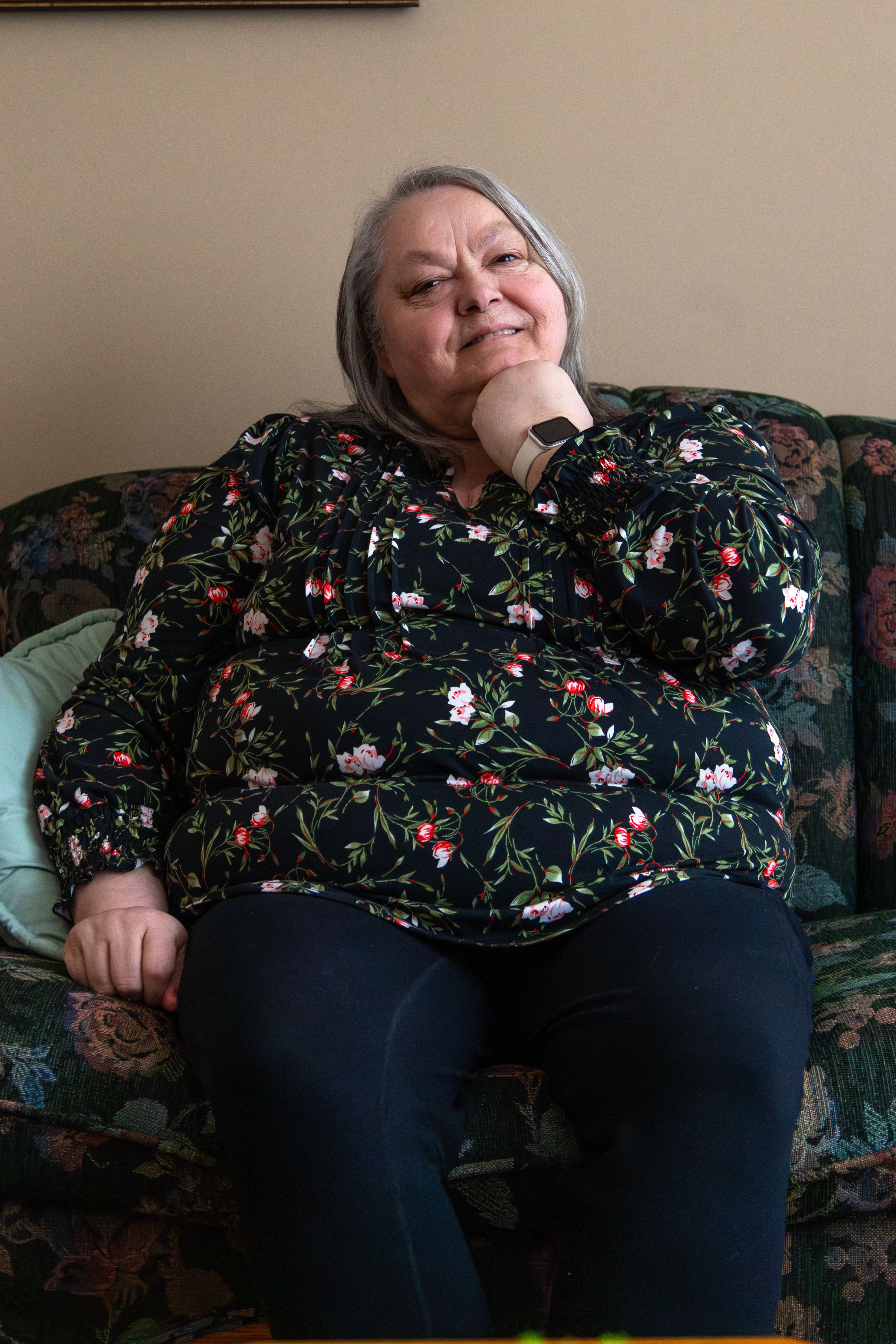

Evelyn Procyk
Age: 62 Smart Watch: Apple Watch SE (2nd Generation)
When 62-year-old Evelyn Procyk bought her and her husband Apple Watches, she never had a real use for it other than taking the time – until it saved her life.
“I’m not technology smart, so for me [I used it for] walking, exercise, and to know how much I did everyday,” she says.
According to the National Library of Medicine, many seniors purchase a wearable device for health management based on one of three main priorities: to keep track of health-related information as they manage chronic health conditions, to stay active and socially connected, and/or to monitor their health and change their behaviour based on personal risks to health decline.
Despite her initial, rudimentary use of the watch, Procyk was quickly advised to never take it off.
One night in late December, Procyk woke up to a consistent sensation in her wrist from the device, notifying her of an elevated heart rate. Due to the alert, her husband took her to Cochrane Urgent Care where she was diagnosed with atrial fibrillation.

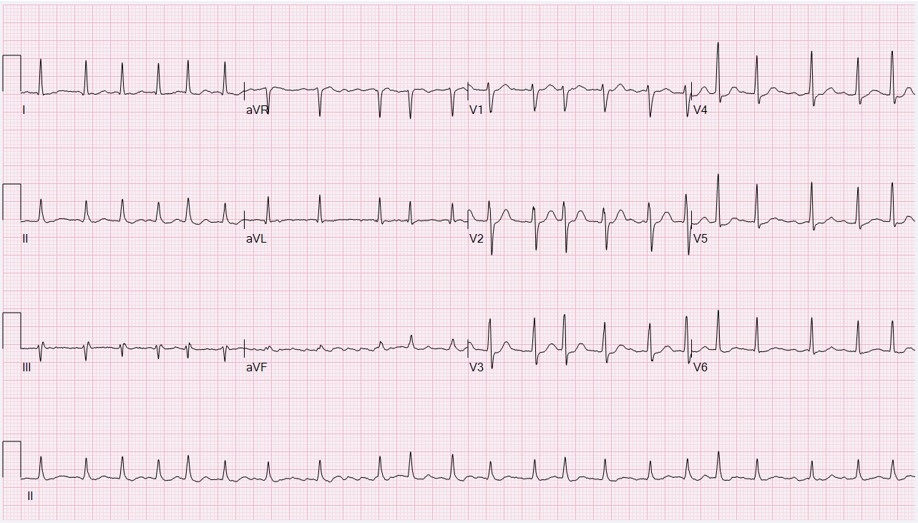
ECG of atrial fibrillation at 132 bpm. The above ECG shows a fast and irregular heart rhythm where the upper chambers (atria) are not beating in coordination with one another. Instead of clear, regular P waves (which normally represent atrial contractions), the baseline is wavy and uneven. PHOTO BY: WIKIPEDIA COMMONS
ECG of atrial fibrillation at 132 bpm. The above ECG shows a fast and irregular heart rhythm where the upper chambers (atria) are not beating in coordination with one another. Instead of clear, regular P waves (which normally represent atrial contractions), the baseline is wavy and uneven. PHOTO BY: WIKIPEDIA COMMONS
The University of Ottawa Heart Institute defines atrial fibrillation as an “irregular heartbeat, or arrhythmia, occurring when the electrical signalling in your heart is disrupted.”
Following her diagnosis Procyk met with a cardiologist at the Foothills Medical Centre in Calgary.
Procyks says she’s confident in her watch because the doctors took the readings seriously.
“When I said my watch was the one that identified that there was an issue, I didn't have a long waiting time.”
Canadian health care professionals use the Canadian Triage and Acuity Scale to assess a patient's need for care.
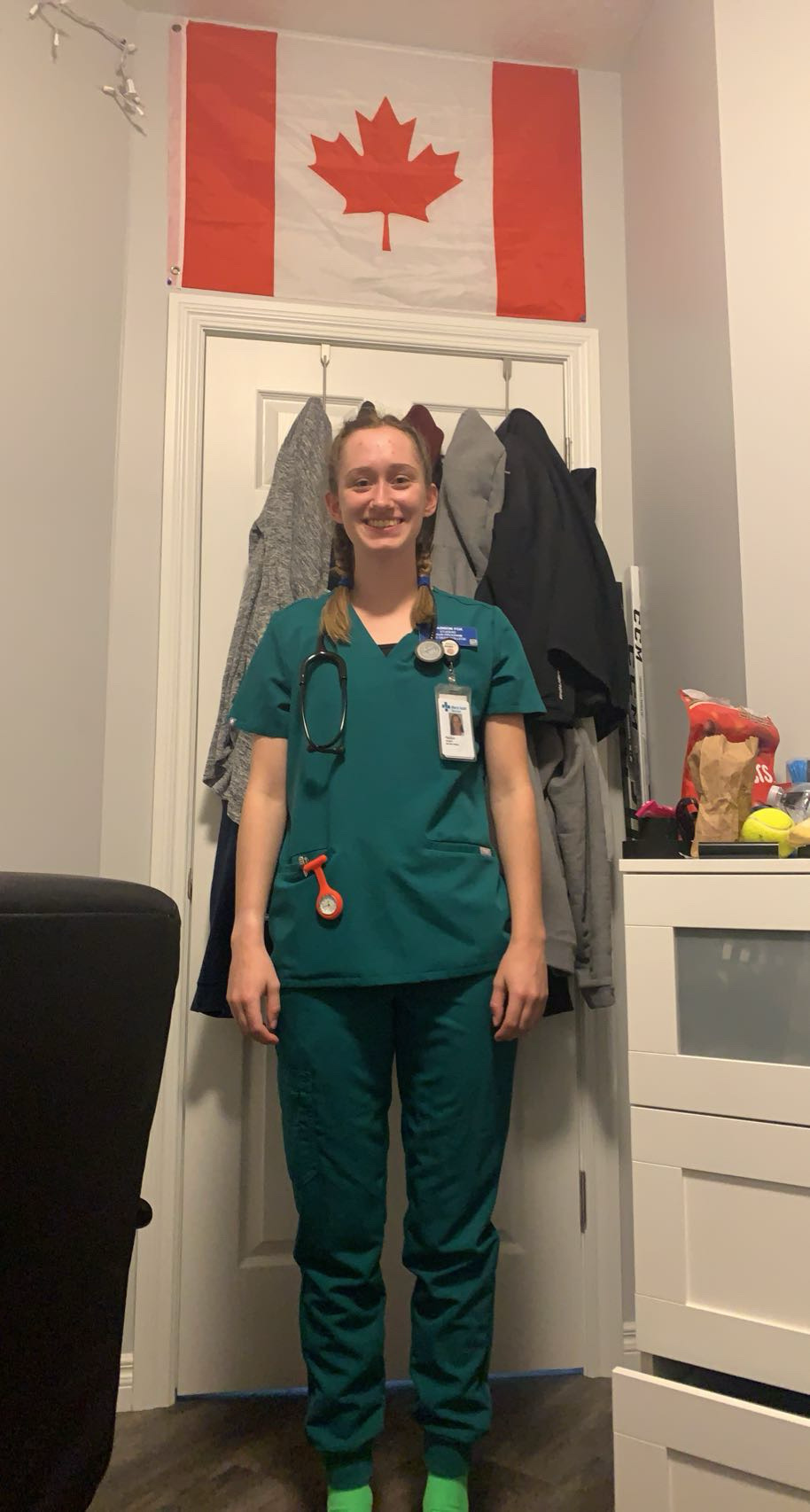
Madison Fox, a registered nurse at the Innisfail Health Centre in central Alberta, says patients’ conditions are measured on a scale of one through five.


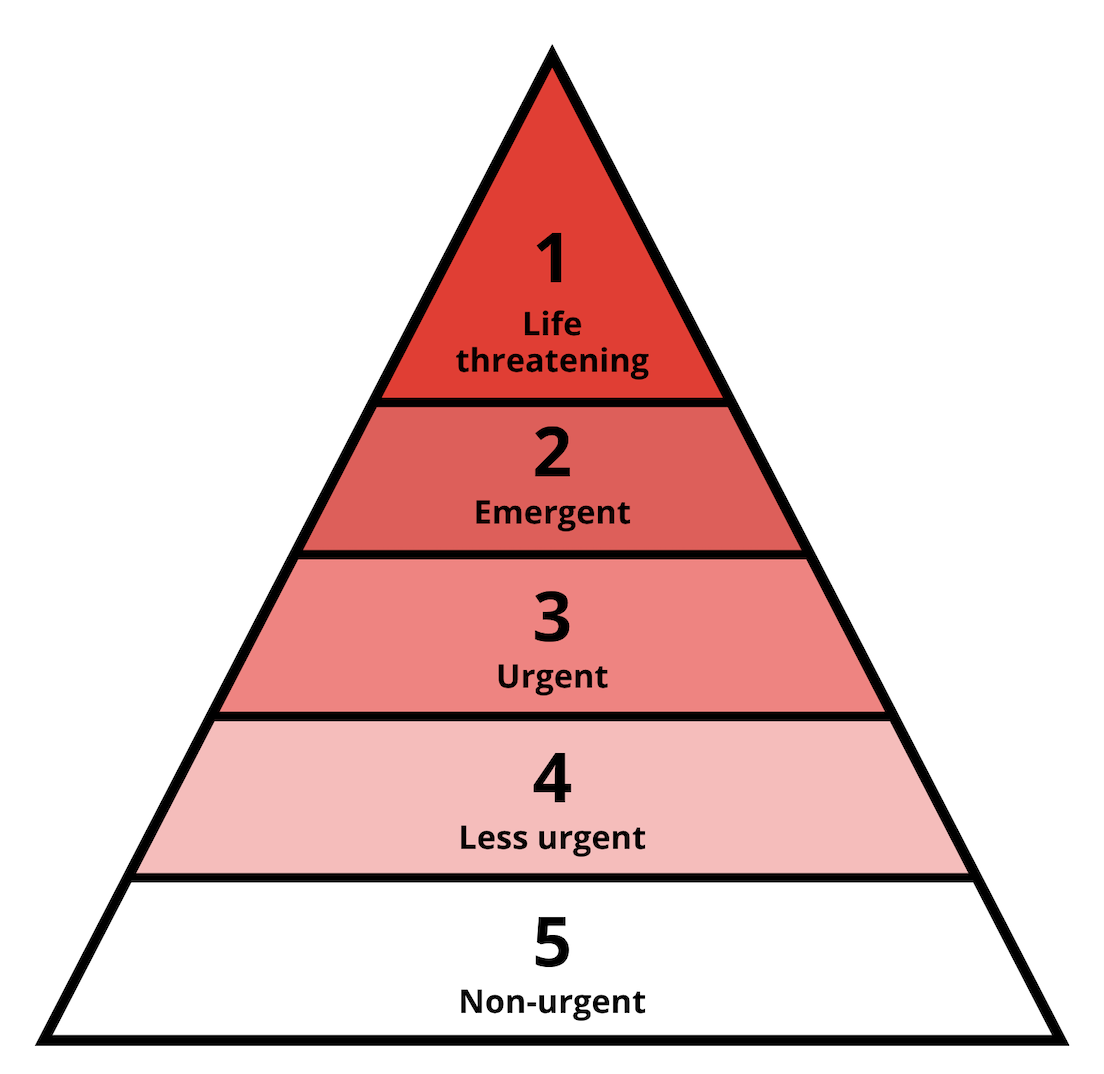
A tiered scale measures a patient's need for care using numbers one through five. PHOTO ADAPTED FROM: ONTARIO MINISTRY OF HEALTH, BY: AVA FREE
A tiered scale measures a patient's need for care using numbers one through five. PHOTO ADAPTED FROM: ONTARIO MINISTRY OF HEALTH, BY: AVA FREE
“Most cardiac patients that come through [our doors] are triaged as a two. Any sort of chest pain or cardiac condition is taken very seriously by nurses and doctors because you never know how fast the patient might deteriorate,” says Fox.
She says most patients who score a one are immediately taken to trauma centres such as Foothills Medical Centre.
Assessing your symptoms
Nanette Alvarez, a cardiologist through the University of Calgary and Peter Lougheed Centre, who specializes in general cardiology and treating the aorta, says she always encourages her patients to assess their symptoms after receiving a health notification on their device.
“The heart rate and the rhythm on the Apple Watch or equivalent watches is a good first step,” says Alvarez.
Despite her diagnosis of atrial fibrillation, doctors continued to monitor Procyk’s rhythms and heart rate by way of her watch. Procyk is grateful for the ways this experience has helped her to feel more self-assured.
However, before her diagnosis, she would often disregard symptoms and accept discomfort.

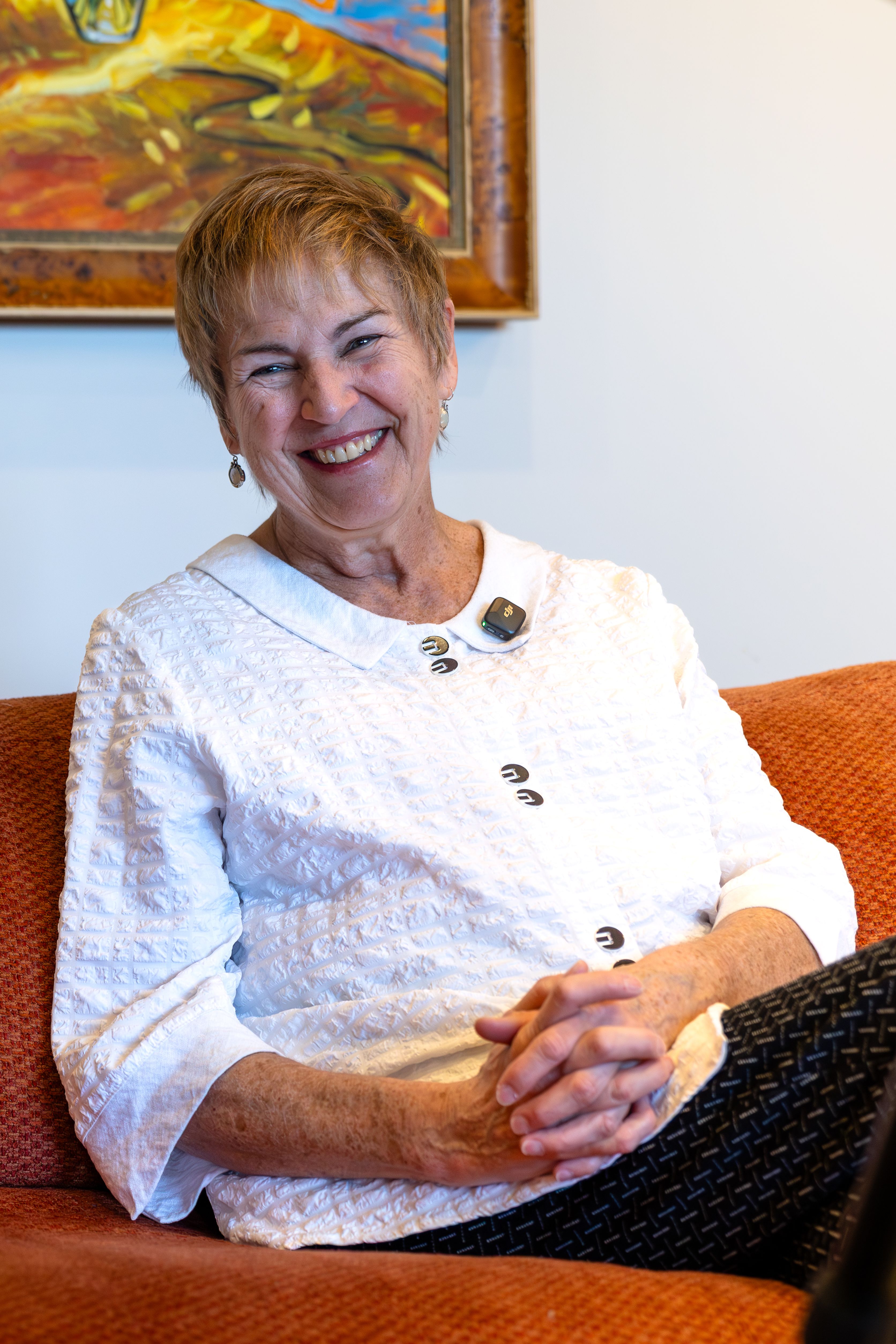
Today, she wears her watch 24-7.
Three months later, after wearing a Holter monitor and additional testing, Procyk is on the list to receive a pacemaker. What started as a means to basic health management led her to a life-changing discovery.
 Built with Shorthand